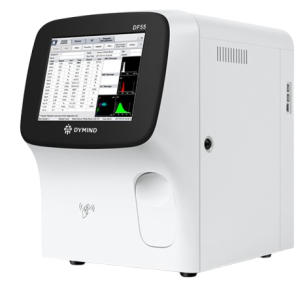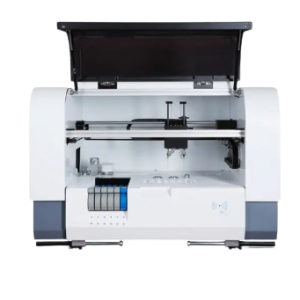


AVE-772 Fully Automated Urine Chemistry & Sediment Analyzer
The AVE-772 is a high-throughput, fully automated urinalysis system combining dry chemistry strip analysis + flow digital microscopy for up to 120 samples/hour. Designed for medium to large laboratories, it delivers 14 chemistry parameters + 12 formed elements in a single run, with AI-powered sediment classification, 10.4-inch touchscreen, built-in thermal printer, 100,000-result storage, and bidirectional LIS/HIS connectivity for comprehensive, walk-away urine testing.

Description
Test Parameters: Complete Urinalysis Profile The AVE-772 performs integrated dry chemistry and microscopic sediment analysis in one platform, covering 14 chemical parameters (glucose, bilirubin, ketone, specific gravity, blood, pH, protein, urobilinogen, nitrite, leukocytes, ascorbic acid, microalbumin, creatinine, calcium) and 12 formed-element categories (RBC, WBC, squamous epithelial cells, non-squamous epithelial, hyaline casts, pathological casts, crystals, bacteria, yeast, mucus, sperm, etc.). This enables simultaneous screening for UTI, diabetes, kidney disease, hematuria, and crystalluria, providing quantitative counts and semi-quantitative chemistry results for accurate clinical decision-making.
Parameters Measured: Chemistry: 14 parameters via reflectance photometry (linearity e.g., glucose 0–1000 mg/dL, protein 0–1500 mg/dL, pH 5–9). Sediment: 12 elements via flow digital imaging with AI classification (>98% specificity), reporting actual counts per µL or HPF (e.g., RBC 0–500/µL, WBC 0–1000/µL, bacteria 0–5000/µL). Auto-flags abnormal results, cross-checks chemistry vs. sediment (e.g., positive blood + RBC count), and generates composite reports with images.
Sample Requirements: Processes 2 mL native urine (no centrifugation required) in standard 10 mL tubes. Supports random, first-morning, or catheter specimens; automatic mixing and aspiration eliminate manual preparation. STAT lane allows emergency samples in <5 minutes.
Throughput: Up to 120 tests/hour (chemistry + sediment) in continuous loading mode. Average TAT: 60–90 seconds per sample. 100-tube rack capacity enables true walk-away operation for 60–90 minutes.
Technology:
- Dry chemistry: 6-wavelength LED reflectance photometer with temperature-controlled incubation.
- Sediment: Sheath-flow digital microscopy + deep-learning AI for particle recognition and auto-categorization (trained on >500,000 images).
- Integrated barcode scanner, rack feeder, and waste separation system.
User Interface and Storage: 10.4-inch color touchscreen with intuitive workflow, real-time images, and editable reports. Stores >100,000 results with full chemistry values, sediment images, and histograms. Built-in thermal printer + external printing support; USB, LAN, HL7 bidirectional LIS/HIS connectivity.
Reagent & Consumables System: Closed reagent strips (200 strips/cartridge, 12-month shelf life), sediment staining solution (on-board 1 L bottle), and low-volume waste design (<5 mL/sample). Automatic QC with 3-level liquid controls and Levey-Jennings charts.
Dimensions and Portability: Benchtop footprint 850 × 680 × 620 mm (W × D × H), weight 85 kg. Operates on AC 100–240V, 400 VA, ambient 15–32°C, <80% RH.
- Throughput: 120 samples/hour (chemistry + sediment)
- Detection Channels: 6-wavelength photometry + digital flow microscopy with AI
- Detection Principle: Reflectance photometry + sheath-flow imaging and deep-learning classification
- Detection Items: 14 chemistry + 12 sediment elements; cross-check flags and composite reporting
- Built-in thermal printer + external support
- >100,000 results with images and histograms
- Sample modes: Native urine, auto-mixing, STAT priority, rack loading